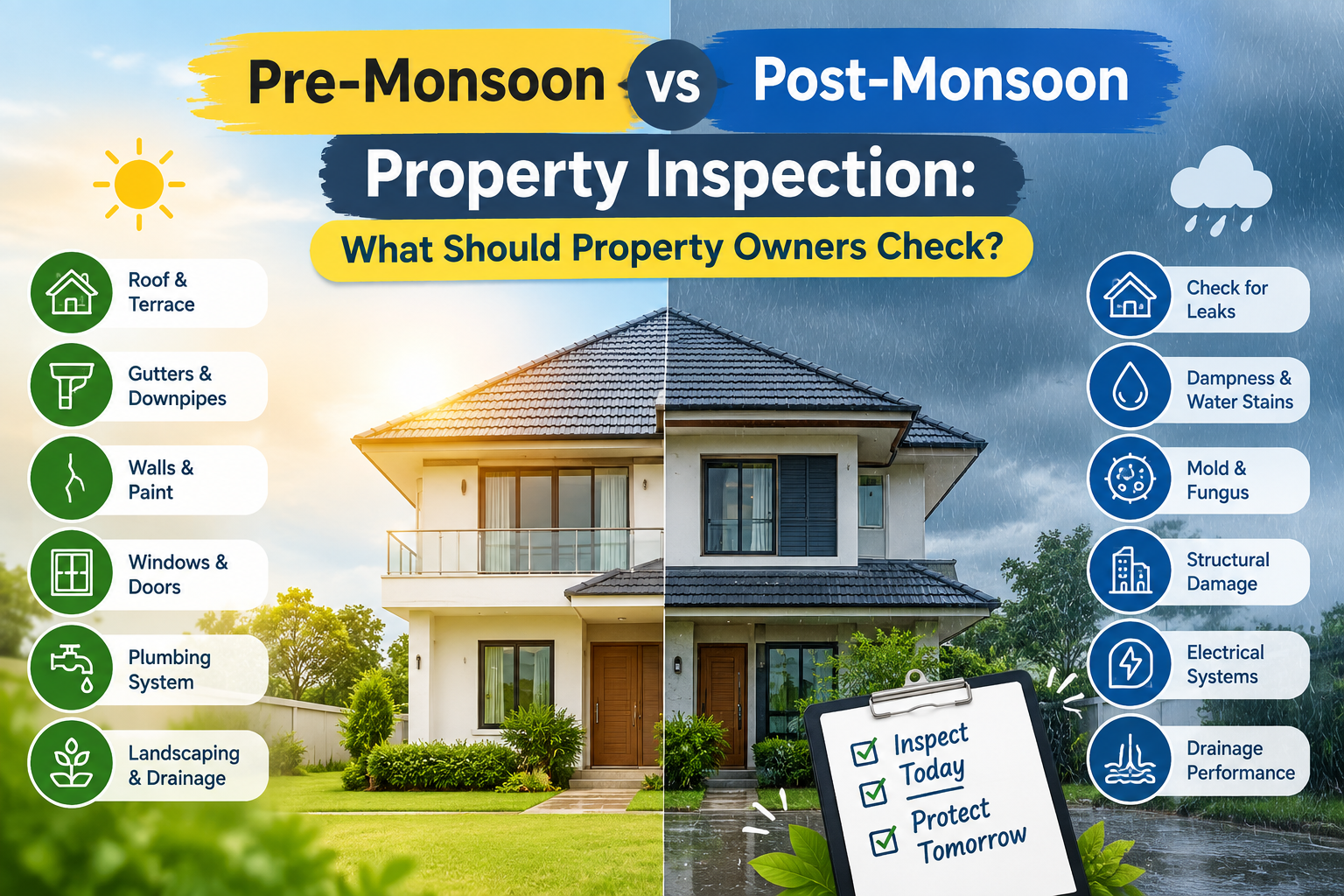
Pre-Monsoon vs Post-Monsoon Property Inspection: What Should Property Owners Check?
Monsoon brings much-needed rain, but it can also expose properties to water leakage, dampness, drainage blockages, electrical problems, pest infestations, and structural issues. For property owners, especially those who live away from their properties, regular inspection before and after the monsoon can prevent small problems from becoming expensive repairs.
A professional property inspection and maintenance service helps identify potential risks early and ensures that your property remains safe, functional, and well-maintained throughout the rainy season.
At Sitril Property Management, we help property owners monitor and maintain their properties with systematic inspections, maintenance coordination, and timely repair support.
Why Is Monsoon Property Inspection Important?
Heavy rainfall can affect almost every part of a property. Water can enter through damaged roofs, cracks, balconies, windows, and poorly sealed areas. Blocked drains can cause waterlogging, while prolonged moisture can lead to mould, wall dampness, and pest problems.
For rental property owners, these issues can also affect tenants and lead to complaints, emergency repairs, and unnecessary expenses.
A simple solution is to follow a pre-monsoon and post-monsoon inspection checklist.
Pre-Monsoon Property Inspection Checklist
A pre-monsoon inspection should ideally be completed before heavy rainfall begins. The objective is to identify vulnerabilities and fix them before they cause damage.
1. Check the Roof and Terrace
The roof and terrace are among the areas most exposed to rainwater.
Property owners should check for:
- Cracks and damaged surfaces
- Water accumulation
- Loose tiles
- Damaged waterproofing
- Blocked rainwater outlets
- Signs of previous water leakage
- Damaged parapet walls
Early waterproofing and repair can help reduce the risk of water seepage during heavy rainfall.
2. Inspect Rainwater Drainage
Blocked or damaged drainage systems can quickly result in waterlogging.
Check:
- Terrace drains
- Rainwater pipes
- External drainage lines
- Gutter systems
- Basement drainage
- Surrounding property drains
Leaves, dirt and debris should be removed regularly during the rainy season.
3. Check Walls for Cracks and Dampness
Inspect both internal and external walls for:
- Hairline cracks
- Large cracks
- Existing damp patches
- Peeling paint
- Discolouration
- Moisture marks
Small cracks should not be ignored because they can allow rainwater to enter the structure.
4. Inspect Plumbing Systems
Heavy rain can put additional pressure on drainage and plumbing systems.
Check for:
- Leaking pipes
- Blocked pipelines
- Slow drainage
- Damaged taps
- Bathroom leakage
- Kitchen plumbing issues
- Sewage or drainage problems
Fixing plumbing issues before the monsoon can prevent emergency maintenance later.
5. Check Electrical Safety
Water and electricity can be a dangerous combination.
Inspect:
- Outdoor electrical points
- Switchboards
- Wiring
- Meter areas
- Backup power systems
- Exterior lights
- Exposed cables
Any damaged or exposed electrical wiring should be addressed by a qualified professional.
6. Inspect Doors and Windows
Check whether doors and windows close properly and whether their frames have adequate sealing.
Look for:
- Water entering through window gaps
- Damaged seals
- Rusted frames
- Cracked glass
- Damaged locks
- Moisture around window edges
Proper sealing can help prevent rainwater from entering the property.
7. Check Trees and Outdoor Areas
Overgrown trees and weak branches can become a safety risk during storms.
Inspect:
- Trees close to the building
- Weak branches
- Boundary walls
- Compound areas
- Parking areas
- Outdoor structures
Necessary trimming and repairs should be completed before heavy rainfall.
Post-Monsoon Property Inspection Checklist
A post-monsoon inspection is equally important. Some problems may not become visible until after prolonged exposure to rain.
1. Look for Water Seepage
Inspect ceilings and walls for:
- New damp patches
- Water stains
- Peeling paint
- Bubbling paint
- Mould
- Musty smells
These can indicate hidden water leakage or waterproofing problems.
2. Inspect the Roof and Terrace Again
After the monsoon, check whether the roof has developed:
- New cracks
- Damaged waterproofing
- Standing-water areas
- Broken tiles
- Damaged drainage outlets
Post-monsoon repairs can prevent the same problems from becoming worse during the next rainy season.
3. Check for Mould and Fungus
High humidity can encourage mould growth, particularly in:
- Bathrooms
- Kitchens
- Storage rooms
- Closed rooms
- Walls with poor ventilation
- Areas affected by water leakage
Mould should be addressed promptly to prevent further property deterioration.
4. Inspect Plumbing and Drainage
Check whether the drainage system is functioning normally after the rainy season.
Look for:
- Slow drainage
- Blockages
- Broken pipes
- Bad odours
- Water stagnation
- Sewage-related issues
5. Check for Pest Infestation
Monsoon conditions can increase pest activity.
Look for signs of:
- Termites
- Cockroaches
- Mosquito breeding
- Ants
- Rodents
- Other insects
A professional pest-control inspection can help identify and address infestations early.
6. Inspect Exterior Walls and Paint
Rain can affect exterior paint and wall surfaces.
Look for:
- Peeling paint
- Discolouration
- Cracks
- Algae growth
- Dampness
- Surface deterioration
Depending on the condition, the property may require repainting, crack repair, or waterproofing.
Pre-Monsoon vs Post-Monsoon Inspection
| Inspection Area | Pre-Monsoon | Post-Monsoon |
|---|---|---|
| Roof & Terrace | Check cracks and waterproofing | Identify rain-related damage |
| Drainage | Clean and unblock | Check for blockages/damage |
| Walls | Identify existing cracks | Check for new dampness |
| Plumbing | Fix leaks and blockages | Check for post-rain problems |
| Electrical | Check exposed wiring | Inspect for moisture-related issues |
| Windows | Check sealing | Look for water entry |
| Pest Control | Prevent infestation | Identify new infestation |
| Exterior Paint | Repair vulnerable areas | Assess rain damage |
| Compound | Trim trees and clear debris | Check for damage/waterlogging |
Why Property Owners Should Not Wait for Problems
One of the biggest mistakes property owners make is waiting until a visible problem becomes serious.
A small roof crack can eventually lead to water seepage. A blocked drain can cause waterlogging. A minor plumbing leak can result in wall damage. Delaying maintenance can therefore increase both repair costs and property downtime.
Regular inspections help property owners move from reactive maintenance to preventive property management.
What About NRI and Outstation Property Owners?
For property owners who live in another city or country, inspecting a property during monsoon can be difficult.
They may not immediately know:
- Whether the property has developed a leak
- If tenants are facing maintenance issues
- Whether the terrace drainage is blocked
- If walls have developed dampness
- Whether pests have entered the property
- If repairs are actually being completed
This is where professional property management can make a significant difference.
With regular property inspections and maintenance coordination, owners can receive updates about the condition of their property without having to personally visit every time.
How Sitril Property Management Helps During Monsoon
At Sitril Property Management, we help property owners monitor their properties and coordinate necessary maintenance.
Our property management support can include:
Property Inspection
Regular checks to identify visible maintenance and property-related issues.
Maintenance Coordination
We coordinate with appropriate service professionals for repairs and maintenance requirements.
Plumbing & Leakage Support
Identification and coordination of solutions for plumbing, drainage, and leakage-related issues.
Waterproofing
Support for waterproofing requirements to help protect vulnerable areas from rainwater seepage.
Pest Control
Coordination of pest-control services when monsoon-related pest problems arise.
Tenant Management
For rental properties, we help coordinate tenant maintenance complaints and communicate required repairs to the property owner.
Property Monitoring
Owners who live away from their properties can have their property monitored and maintenance requirements coordinated locally.
A Simple Monsoon Property Management Strategy
Property owners can follow this simple approach:
Before Monsoon → Inspect → Identify → Repair → Protect
During Monsoon → Monitor → Respond → Maintain
After Monsoon → Inspect → Document → Repair → Prevent
This approach can help reduce unexpected maintenance expenses and protect the long-term condition of the property.
Final Thoughts
Monsoon property maintenance should not begin only when water starts entering the house. Pre-monsoon inspection helps prevent problems, while post-monsoon inspection helps identify damage early.
For landlords, NRI property owners, and people managing properties from another city, professional property management can make this process easier and more systematic.
From property inspections and maintenance coordination to plumbing, waterproofing, pest control, and tenant support, Sitril Property Management helps property owners manage their properties with greater confidence—even when they are away.
Don’t wait for the next leak to discover a maintenance problem. Inspect your property before and after every monsoon.
Need professional property management?
Sitril Property Management
📞 +91 91768 28999
🌐 www.sitrilgroups.com
📧 info@sitrilgroups.com